noli.

Register

Squat University@squatuniversityTikTok

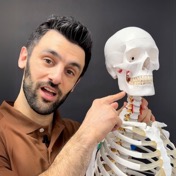
Soft tissue work doesn’t need to be painful to get benefits mtherapeutics/IG @Muscle & …more

original sound — @squatuniversity

what it claims

To improve flexibility and mobility (such as ankle mobility before a squat), there is no need to inflict intense pain on yourself. Using a foam roller for 60 seconds at a moderate level of discomfort (approximately 5/10) offers the exact same flexibility benefits as very painful pressure (9/10).

holds up

This recommendation is based on solid scientific data. A randomized crossover study conducted by Grabow et al.

noli's read

This recommendation is based on solid scientific data. A randomized crossover study conducted by Grabow et al. (2018) compared massage pressures corresponding to 50%, 70%, and 90% of the maximum pain threshold: researchers found that moderate intensities led to identical flexibility gains as the most painful pressures. Furthermore, several meta-analyses, including that of Wiewelhove et al. (2019), confirm that foam rolling temporarily improves joint mobility without altering muscle strength. Nevertheless, the creator is applying results from a study conducted with a 'roller massager' (a handheld stick) to classic 'foam rolling' (using body weight), which may affect the self-regulation of pressure. Additionally, it is worth tempering this advice by noting that these flexibility gains are highly ephemeral and generally fade within a few tens of minutes. Finally, the exact equivalence of a 5/10 sensation from one user to another remains subjective and has not been subject to strict scientific validation.

the sources

  1. 1Weppler CH, Magnusson SP 2010
  2. 2Behm DG, Blazevich AJ, Kay AD, McHugh M 2015

Claimed by Squat University. Noli grades the claim, never the person.

Decoded by Noli · July 13, 2026 · the original post

What the graded evidence says

Evidence
B
Effect
mechanism of range-of-motion gains; acute effects of stretching on performance — increased ROM largely attributable to greater stretch tolerance (sensory) in the short-to-medium term; prolonged static stretching immediately before activity can transiently reduce strength/power
Measured on
healthy active individuals

What’s uncertain

Whether long-term stretching also changes muscle structure is debated; short-to-medium-term gains are mostly explained by increased stretch tolerance. Effects on injury prevention are modest and separate from flexibility gains.

Squat University in the Register77 claims graded · solidity 81/100See their record →

More from Squat University

Others on this

Noli has read similar claims

Other advice in the Register that leans on the same research.

Noli, a firefly holding its lantern, at rest

Seen something like this? Send it to Noli.

Paste any health post from TikTok, Instagram, YouTube or X — or the advice itself, if someone just told you. About ten seconds, no account needed.