noli.

Register

Squat University@squatuniversityTikTok

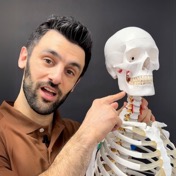
Squat help for @jamespolgym #squat #gym #fitness #lifting #workout #bodybuilding …more

original sound — @squatuniversity

what it claims

To improve your squat depth, prioritize active mobility work (such as holding the bottom position of a squat with a light counterweight) rather than passive stretching, as the body requires strength and control to fully utilize its range of motion.

holds up

The distinction between passive flexibility and active mobility is widely validated by sports science. A systematic review by O'Sullivan et al.


noli's read

The distinction between passive flexibility and active mobility is widely validated by sports science. A systematic review by O'Sullivan et al. (2012) demonstrates that strengthening through full ranges of motion (such as the loaded squat) actively improves overall flexibility, often proving more effective than static stretching. Conversely, a meta-analysis by Kay and Blazevich (2012) confirms that isolated passive stretching has very little transfer to dynamic performance and motor coordination. Biomechanically, using a front load (the goblet squat) acts as a natural counterweight that shifts the center of gravity forward, which facilitates deeper hip flexion without loss of balance (consensus of biomechanics experts). While the dramatic improvement after only "5 repetitions of 20 seconds" is more likely a temporary decrease in the nervous system's protective reflex (stretch tolerance) rather than a physical change in muscle length, it nonetheless serves as an excellent learning tool for reprogramming movement.

the sources

  1. 1Weppler CH, Magnusson SP 2010
  2. 2Behm DG, Blazevich AJ, Kay AD, McHugh M 2015

Claimed by Squat University. Noli grades the claim, never the person.

Decoded by Noli · July 14, 2026 · the original post

What the graded evidence says

Evidence
B
Effect
mechanism of range-of-motion gains; acute effects of stretching on performance — increased ROM largely attributable to greater stretch tolerance (sensory) in the short-to-medium term; prolonged static stretching immediately before activity can transiently reduce strength/power
Measured on
healthy active individuals

What’s uncertain

Whether long-term stretching also changes muscle structure is debated; short-to-medium-term gains are mostly explained by increased stretch tolerance. Effects on injury prevention are modest and separate from flexibility gains.

Squat University in the Register77 claims graded · solidity 81/100See their record →

More from Squat University

Others on this

Noli has read similar claims

Other advice in the Register that leans on the same research.

Noli, a firefly holding its lantern, at rest

Seen something like this? Send it to Noli.

Paste any health post from TikTok, Instagram, YouTube or X — or the advice itself, if someone just told you. About ten seconds, no account needed.