noli.

Register

Squat University@squatuniversityTikTok

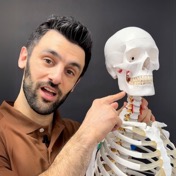
How to improve ankle mobility @Michael Dean @Muscle & Motion

original sound — @squatuniversity

what it claims

If your heels lift off the ground or your feet turn outward during a squat, it is due to a lack of ankle mobility. To address this, use a thick resistance band placed under the malleoli during an active forward stretch (joint mobilization with movement) to instantly free up the motion and improve your squat depth.

mixed

The link between limited ankle mobility and common squat compensations (heels lifting, feet turning outward) is well-documented by observational research (such as Kim et al…


noli's read

The link between limited ankle mobility and common squat compensations (heels lifting, feet turning outward) is well-documented by observational research (such as Kim et al., 2015), confirming that good ankle flexion is crucial for reaching full depth. Regarding the recommended technique, meta-analyses of randomized clinical trials (notably in the Journal of Manual & Manipulative Therapeutics, 2025) validate the efficacy of mobilization with movement for immediately increasing ankle range of motion. Furthermore, a study on athletes measured a gain in flexion of over 20% and a clear improvement in squat depth following similar band-assisted mobilizations. However, asserting that the inability to reach full depth is exclusively due to the ankles is an exaggeration; a 2025 computer modeling study (MDPI) highlights that this movement depends on a complex interaction between the hips, knees, and individual morphology. Finally, the mechanical explanation that the band physically pushes the talus bone backward remains debated, as the immediate benefits likely stem from a temporary adaptation of the nervous system that releases protective tension around the joint.

the sources

  1. 1Weppler CH, Magnusson SP 2010
  2. 2Behm DG, Blazevich AJ, Kay AD, McHugh M 2015

Claimed by Squat University. Noli grades the claim, never the person.

Decoded by Noli · July 13, 2026 · the original post

What the graded evidence says

Evidence
B
Effect
mechanism of range-of-motion gains; acute effects of stretching on performance — increased ROM largely attributable to greater stretch tolerance (sensory) in the short-to-medium term; prolonged static stretching immediately before activity can transiently reduce strength/power
Measured on
healthy active individuals

What’s uncertain

Whether long-term stretching also changes muscle structure is debated; short-to-medium-term gains are mostly explained by increased stretch tolerance. Effects on injury prevention are modest and separate from flexibility gains.

Squat University in the Register77 claims graded · solidity 81/100See their record →

More from Squat University

Others on this

Noli has read similar claims

Other advice in the Register that leans on the same research.

Noli, a firefly holding its lantern, at rest

Seen something like this? Send it to Noli.

Paste any health post from TikTok, Instagram, YouTube or X — or the advice itself, if someone just told you. About ten seconds, no account needed.